Gym Floor Anxiety: How To Overcome The Fear
It's 2024, and with social media and the popularity of gyms these days, they are much less intimidating and more inclusive than ever. But let's not beat around the bush – they are still quite intimidating places. As much as they have improved, I think we all feel it to some degree.
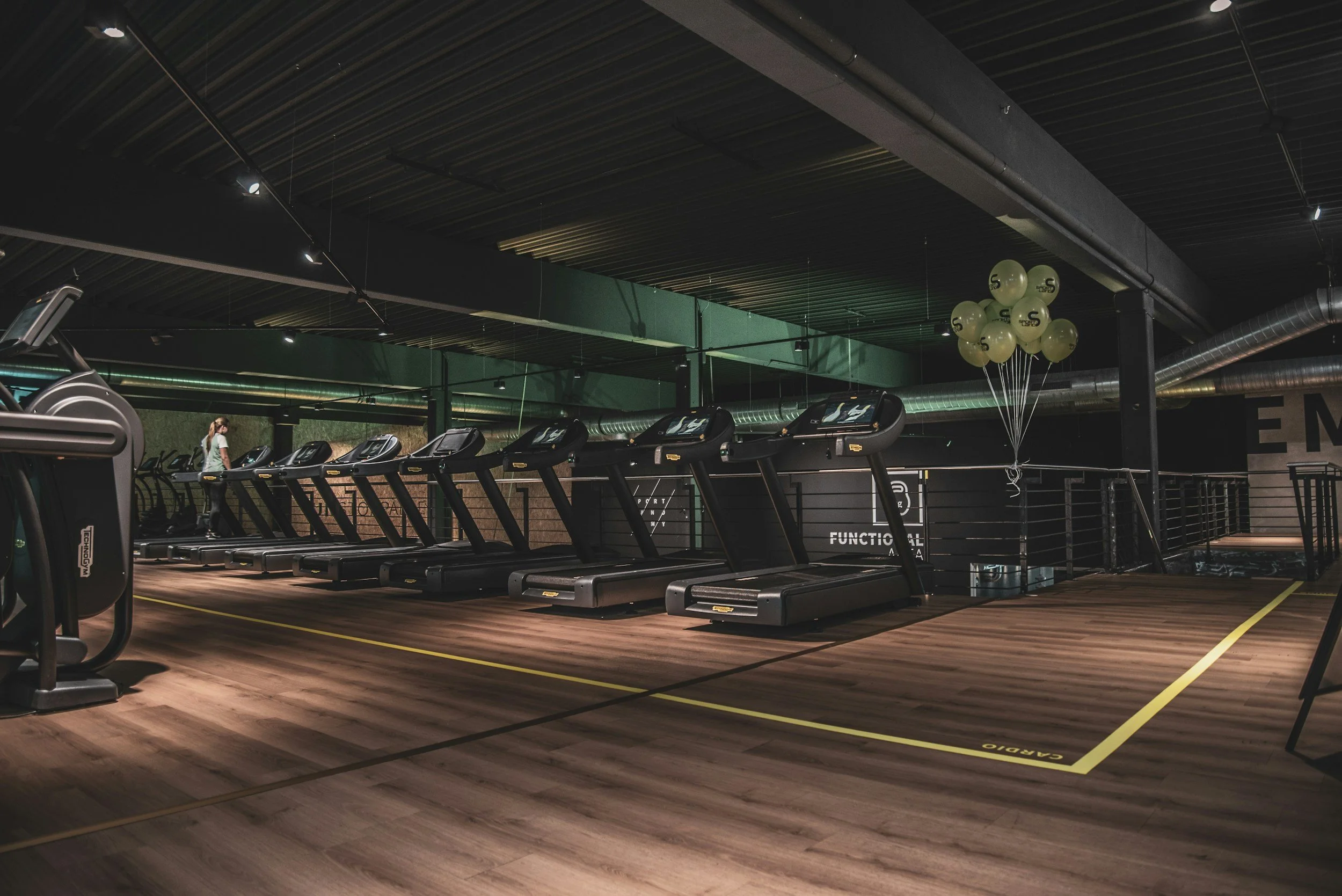
I've been a trainer for 23 years, and I went to a gym quite recently. It was a gym with a lot of equipment I hadn't seen before, which is kind of weird considering how long I've been in the industry. There were also a lot of very big rugby guys training there. I remember being very nervous about going to that gym. I procrastinated all morning, but then I signed up. The guy who signed me up was super lovely. I was looking around the gym floor, watching people work out. I went to this big piece of kit and thought I'd give it a go, put some weight on it. I actually put quite a lot of weight on it straight away, and it was pretty heavy. I didn't have much more scope to put any more weight on it. I did six reps and then struggled; I was done. I took the weight off, moved on to the next bit of kit, and then this massive dude got on the machine, put on basically what I'd put on for six reps, and just started doing like 12 reps as a warm-up. I was like, "Oh, this is super embarrassing; everyone saw that."
So, I get it. We all feel intimidated and nervous about various aspects when we enter the gym. It's something that comes up in my Q&A, which I do every two weeks on Instagram. The topic of anxiety around training comes up all the time.
First up, let's just normalise it and talk about some common triggers:
New to the gym: Feeling a little bit out of place, not really knowing what anything does, what the equipment does, or what the exercises are.
Crowded spaces: Gyms are pretty crowded. It's very intimidating to have that many people around you. It's overstimulating, and then you get that feeling like you're being watched whilst you're in there.
Perceived fitness of others: Sometimes people just look like they're really fit, they've got abs out, and they know exactly what's going on in their own workouts. You're coming in, and it's new to you.
Complex machines: As I mentioned earlier, they can be pretty complex to use. They've got big levers, black and yellow and green, and sometimes they look like a spaceship. That by itself can be pretty intimidating.
Body image concerns: Feeling quite self-conscious and out of place in the gym, especially when you see people with abs out doing crazy things on bars. It can feel pretty hard to get going in that environment.
Lack of privacy: You're in an open gym space, working out right by other people. It can be quite challenging if you're just not used to it.
I think this is it: for those who go to the gym regularly, sometimes they forget. I certainly do, just working at the same gym all the time, you get so used to being in that gym. For me, it's actually quite nice to go to different gyms all the time because you sort of go back to that newbie feeling semi-frequently, and it's a good reminder for me that, yeah, it's nerve-racking to do that. For people who are totally new to exercise, it's like ten times the nerves.
One thing I will go on to say is about making fitness part of a social club. Even with personal trainers and other gym-goers who all know each other, you sort of see those groups of trainers and their mates high-fiving and clapping each other, and that can feel quite intimidating by itself as well. It might look a little bit cliquey, and I get it – some people just don't want to be in that environment, and potentially, they're not the sort of person that wants to be super chatty whilst in the gym.
Online fitness and online gym coaches can be great, but it can also be quite negative if you get trolling trainers saying, "You should be doing this," or "You'll blow your knees out," or "You should be more disciplined," always awful people trying to tag lines. This makes people feel like they're going to be judged from the get-go.
As much as gyms have improved, strength training specifically, there is still that gender dynamic in the gym. It still feels like many gyms' strength-training areas are heavily male-dominated. We all feel funny when four young lads are on a bench press, all chatting, and you have to go over and ask, "Are you using that?" It's not nice for anyone to have to go through that.
So, recognising some of those classic triggers when it comes to anxiety, let's talk about some good strategies to overcome them:
Book a familiarisation tour: When you're going to the gym, make sure you book a familiarisation tour. Maybe it's the reception staff or the sales staff, nothing to do with fitness. They take you around, and at least you get to ask questions like, "How busy is the gym at certain times?" You can look at the layout of the gym yourself, maybe get a feel for where it looks like the sort of zone you could start your training journey. You don't have to expand your training world immediately, but at first, you just want to find something that you can get to and get going.
Book an initial consultation with a personal trainer: The gym will always offer some sort of intro into the gym. That really just needs to be for you to learn how to use the equipment. Yes, they can build your program, but at this stage, I care more about what two or three things I can do, and you show me how to do them, and you can go in and practice those two or three things. Don't be afraid of requesting maybe a female PT or an older PT. No disrespect to young guys, but I know as a 19-year-old personal trainer when I first started in the industry that not everyone wants to do an induction with a 19-year-old kid. So, if you're okay to ask, "Can I work with a woman for this one?"
Have a plan: I think having a plan is key. There are lots of apps out there that you can use, but even if you don't want to do that, you could literally say, "Right, I've seen online – you don't have to name names – this one where I hold a weight here and I bend my knees up and down." So, write it down, just write down whatever reminds you of the exercise, and have maybe four exercises that you can do. Just have some sort of plan in place. When you're walking in, you're not walking into a super overwhelming space and then trying to put a workout together whilst feeling intimidated at the same time.
Find your comfort zone: I mentioned about finding that comfort zone. You can do that right from the get-go. Generally speaking, when I start working with clients that are quite anxious about going to the gym, it's usually the dumbbells and the benches. Where the dumbbells are, there are no barbells; it's not hopefully too intimidating. One bench, maybe two different dumbbells, so you can just go there and get some work done. That could be your world for the first three to four weeks whilst you think to expand out from there.
Train with a friend or partner: Of course, if you've got access to any friends or partners that like to train, going in with a friend or partner is an obvious one. You can book personal training sessions, of course, that's quite expensive, but it could be a very nice way to get a program, maybe a couple of sessions, get them to show you what to do, and then don't have a personal trainer again. So the program is refreshing, maybe in 8 weeks' time. That can be a really nice way to use personal trainers.
Start small: Definitely start small. Let's say 20 minutes walking on the treadmill, and then go and do two strength exercises that you've already written down. The next thing, you come and you do 20 minutes on the treadmill, you may just add in one other strength exercise to sort of build it out. You're not coming in with this like 8-exercise plan, and you've got to work through each one. That can be quite intimidating. So you can use those first early days, or first one to eight weeks, to sort of start and lay out from there.
Take a break if stressed: If you do end up feeling very stressed, then just take a seat, have a break, take a deep breath, just try and stay relaxed, and just remember that this is really common. Lots of people feel it. The kind of conversations around like, "I feel like I'm being judged," people usually aren't doing that. We recognise that in gym coaches that I've been recognised, there will always be newbies in the gym, and it's okay to flirt with weight, and it's okay to take yourself off, have a little breather, and then come back.
So there are some things to work around those initial triggers, but I think it's good to have a longer-term strategy. Because that's good for the first eight weeks, but maybe you do want to start learning to use a leg press, or maybe you do want to start using the barbells as well. So maybe starting to set some realistic goals to sort of build out on your confidence. What could be the most obvious next step for you as far as your workout? Regularly, every 6-8 weeks, maybe update your workout and say, "Right, I'm currently doing this goblet squat exercise where I hold a weight on my chest and then my knees – you don't have to name names – but I have seen people do online this sort of machine with the bars affixed to the cage, a Smith machine. I might start going there because that looks comfortable. I might go speak to the personal trainers in the gym or the gym instructors and get a bit of an intro on that." So you sort of gradually build out your world, taking a goblet squat to a Smith Machine squat to maybe a back squat, and you might do that over a year-long period or a six-month period, depending on your own confidence level. It could be a really great way to start to think longer term about how you're going to build this confidence whilst in the gym.
I think if the gym does any kind of social activities, engaging in that community – if that's social events, if that's an online forum – try and make that place a help for you. Even if not everyone wants to be in those social groups, suddenly creating a community so you speak to reception staff, you speak to trainers that are in there, whilst you're in there, you say those people that are the same kind of age and the same kind of vibe as you that are in that gym. So when you're going in, it's still quite comfortable just to sort of like raise your eyebrows, but "Oh, here," like and then you build out from that. I think it can be a really wonderful thing to do. By doing that, you then start to become just more confident. You're walking in the gym because you're having a two-minute chat with that person. You've noticed they're doing a certain exercise; you ask about that, and it's a really wonderful place to sort of like start to build out from there.
This topic comes up quite a lot with clients, and I've had many wonderful experiences seeing them grow in confidence. I know as a trainer, maybe as the industry might expect trainers to really love like weight loss and clients hitting PBs, and it's nice, of course, it's nice, but I actually take such a lot of joy from watching clients build their confidence in the gym. I remember quite recently, well certainly in the last couple of years, I've been working with a client for years now online, and we very much went through the process I just spoke through, starting with dumbbells, recognising or acknowledging that space you work in, and start there, then spill down, start doing barbells, start doing hip thrusts. This client, like all my clients do, they submit workout videos to me. So you get workout, and then do dumbbell RDLs or barbell RDLs, so I can share a technique. And then one day, the video came into my app, and my client was just wearing like a sports bra mid-drift out, working out. And I just remembered messaging her back and being like, "I absolutely love this video. You look so happy, so confident, so in the zone. It's the first time I've seen you wear anything that's not like a baggy T-shirt." And that growth in the gym, that seeing that confidence, and how that confidence filters out into other areas of their life, for me, that's always going to be one of the most enjoyable things to work with anyone on because that is like real-world transfer to everything that people do. Yes, getting stronger is awesome. Yes, losing weight for some people is a goal of theirs, but feeling more confident in that scenario and just feeling more confident in your body is just awesome, and it's something about training and strength training that I think a lot of people now realise, but it's not probably championed enough.
So, just to wrap up, let's normalise this.
Most people feel anxious and nervous at some point in time. I think it's super important that if you identify in yourself what things really trigger you – is it not knowing? Do you feel people are watching you? What is the trigger? And if you know the trigger, what can you do around it? What can you do about it? Is it going in, having a few PT sessions? Is it going to be starting a community to find out that people actually aren't judging you? People are just in the zone doing their own thing. And I guess, in truth, there will always be idiots, and potentially people that look around and think certain things. You don't know what other people are thinking, and it doesn't really matter. So I think just if you create your own little hub, it's a really wonderful place to make the gym your own social hub. Like I said, not everyone wants to do that, and you don't have to be high-fiving people, but in your own world, in your own sort of what feels right and consistent with your own beliefs, creating a hub of people around you in a gym to support that, I think, is a really nice thing to do.
Like this post? There’s more where that came from